

The Risks of Confined Space Entry
Confined space entry is one of the most hazardous activities in industrial and offshore operations. Tanks, enclosed structures, and process vessels often present a combination of risks, including limited ventilation, restricted access, and challenging working conditions.
Typical hazards include:
- Low oxygen levels
- Toxic or explosive atmospheres
- Heat and humidity
- Slippery surfaces
- Limited visibility and restricted escape routes
For operators and asset owners, confined space entry requires strict procedures, permits, supervision, and emergency preparedness. Despite these precautions, the inherent risks remain significant.
Why Traditional Tank Cleaning Requires Entry
In conventional tank cleaning operations, personnel must enter the tank to perform cleaning tasks manually. This often involves:
- High-pressure water blasting
- Manual scraping of residues
- Working at height using scaffolding or temporary structures
Operators may spend extended periods inside the tank, moving equipment, repositioning hoses, and accessing difficult areas such as vertical walls and overhead structures.
How Robotic Tank Cleaning Reduces Exposure
Robotic tank cleaning does not always eliminate confined space entry entirely, but it significantly reduces the level and duration of exposure.
A crawler-based robotic system performs the cleaning work, while the operator typically remains inside the tank on stable ground with direct line-of-sight to the robot. The system is controlled via cable, allowing precise operation without the need to work at height or move across unstable surfaces.
In setups where cameras are installed, operation without continuous visual contact is possible. However, in most standard operations, direct visibility of the crawler is maintained.
This changes the role of the operator from performing physically demanding cleaning tasks to guiding and monitoring the process.
Staying on the Ground Instead of Working at Height
One of the key safety improvements is the elimination of work at height inside the tank.
Instead of:
- Climbing scaffolding
- Operating on elevated platforms
- Handling equipment in unstable positions
The operator can remain on the tank floor and control the robot as it moves across vertical and overhead surfaces.
This reduces fall risks and simplifies the overall safety setup.
Shorter Time Inside the Tank
Because robotic systems can operate continuously and more efficiently, overall cleaning time is reduced.
This leads to:
- Shorter duration of confined space exposure
- Reduced fatigue
- Fewer personnel required inside the tank
Even when entry is still required, the risk profile is significantly improved.
Improved Control and Predictability
Robotic crawlers allow operators to work in a more controlled and structured way.
Cleaning is typically performed in sections, with the operator guiding the crawler across visible areas to ensure full coverage. Difficult spots can be revisited without additional physical strain.
This improves both safety and operational efficiency. 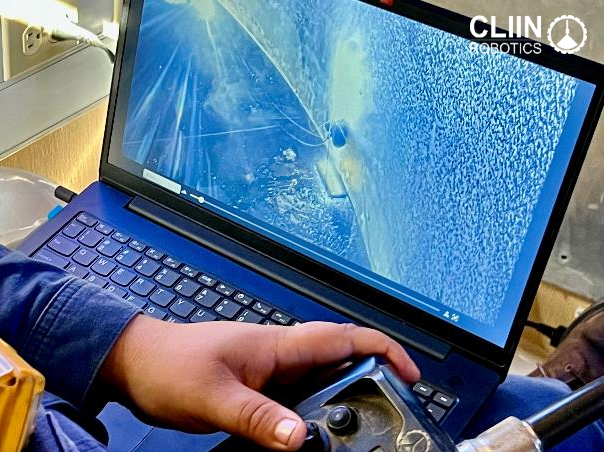
Designed for Steel Structures and Harsh Conditions
The crawler uses magnetic adhesion to maintain contact with underlying steel structures. This allows stable movement across vertical walls and overhead areas, even in wet or coated environments.
The system is designed to operate in harsh industrial conditions, including environments where visibility, surface conditions, and contamination levels vary.
Supporting Safer Tank Cleaning Practices
Reducing confined space risk is not only about eliminating entry, but about improving how work is performed when entry is necessary.
Robotic tank cleaning supports safer practices by:
- Reducing physical workload
- Eliminating work at height
- Shortening exposure time
- Improving control and predictability
A Safer Approach to Tank Cleaning
For operators looking to improve safety without compromising efficiency, robotic tank cleaning offers a practical solution.
To learn more about robotic tank cleaning applications, visit our Tank Cleaning page.
Interested in discussing how robotic solutions could reduce confined space risks in your operations?
Submit an inquiry through our website and our team will get back to you.